Minor Agricultural Commodities Child Labour Support Tool for Businesses
Sourcing from, facilitating or working to develop African agricultural commodity supply chains?
How to use the tool




What should I do next?
-
Identify what collaborative initiatives and analysis are already available for the commodity or country that matters to you
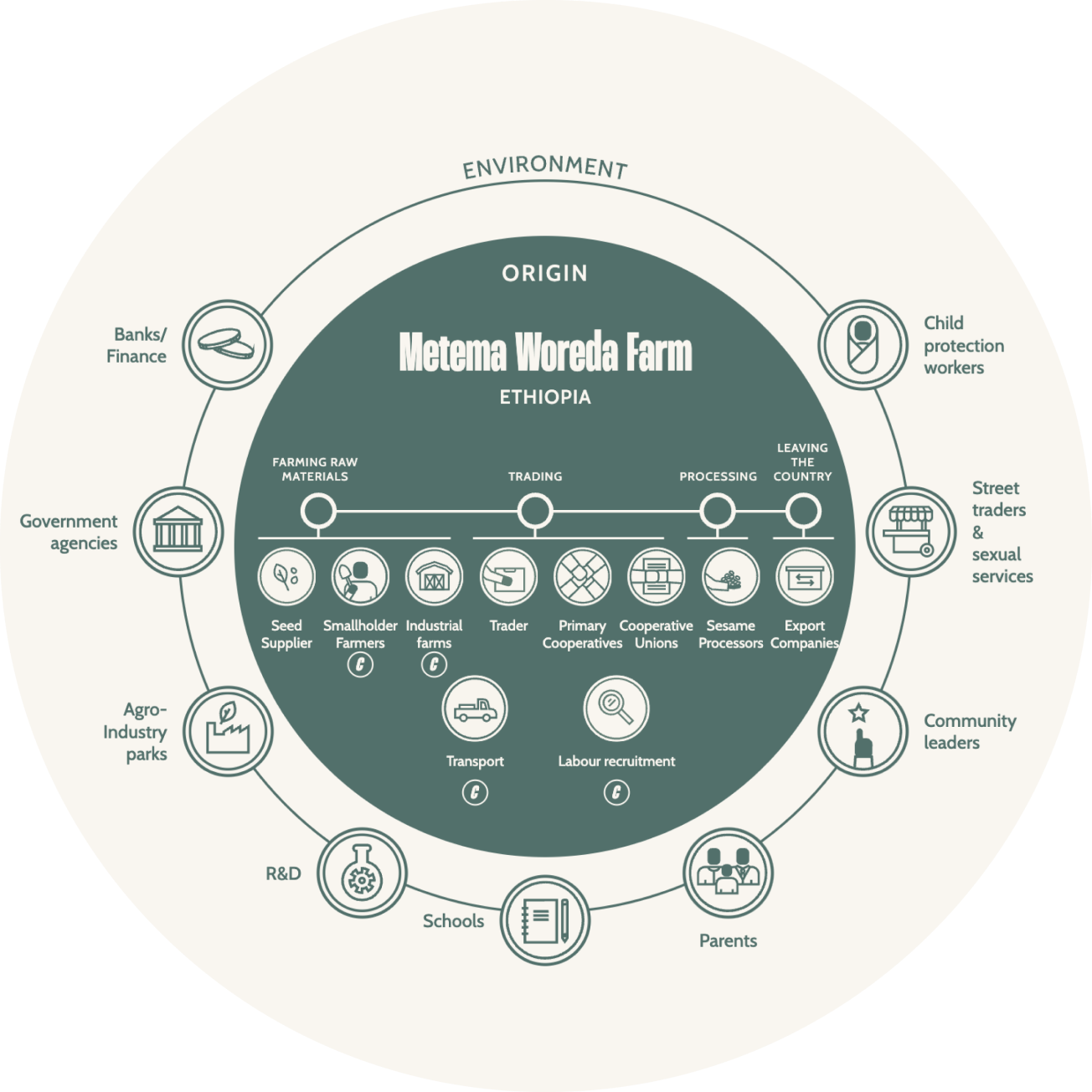
Start with understanding what ideas and interventions have already been identified by local companies and industry stakeholders. If bottom-up value chain mapping is not already available, look to develop this together with others in the industry to identify the particular dynamics that are enabling child labour and what interventions might be most relevant (see example at right).
Please see the following links for more detailed guidance and existing collaborative initiatives:
-
For each commodity and country, you can review interventions identified through PACE's in-depth sesame value chain research in the high-level comparison table
They are broadly applicable to most agricultural supply chains, and provide a starting point to undertake similar analysis in the commodity or sector relevant to you and there are further links and guidance below.
Move as quickly as possible to engaging with meaningful action to address risks at the community level
To address the risks to children, companies, and investors in agricultural supply chains, approaches need to focus on the fastest way to holistically address the risks to children. Develop bottom-up due diligence approaches focused on collective action in the local context rather than individual company risk.
Contact us
Please contact us if you want to receive tool updates, have any questions, or spot any errors.
Share the tool